electricity
noun · Intermediate
Energy that powers lights, machines, and many devices.
Example
The storm cut electricity to the whole village.
In this video: gas, electricity, heating oil and solar power
 NovaLingoNovaLingo
Watch the clip, read a subtitle excerpt, and preview vocabulary taken from this specific video.
From this video
A short excerpt from the English heard in this lesson.
0:06
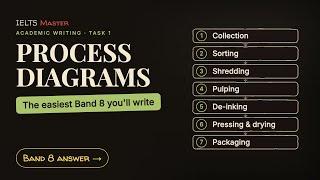
I'm Lee from IELTS Master,
0:07
and we're going to take one line graph and
0:09
build a Band 8 answer, step by step.
0:14
Here's our question.
These definitions and examples come from the language used in this specific lesson.
noun · Intermediate
Energy that powers lights, machines, and many devices.
Example
The storm cut electricity to the whole village.
In this video: gas, electricity, heating oil and solar power
noun · Intermediate
A verb form that shows when an action happens, such as past or present.
Example
Use the past tense when describing yesterday's meeting.
In this video: — so we'll need past tenses and future forms.
go
To move or travel from one place to another; to leave or continue.
take
To get, hold, carry, or use something.
line
A long thin mark, row, border, or series of words.
graph
A drawing or diagram that shows numbers or relationships with lines, bars, or points.
build
To make something by putting parts together.
answer
Something said, written, or done in reply to a question or problem.
step
A movement made by lifting and putting down a foot, or one stage in a process.
question
A sentence or problem that asks for information or an answer.
shows
The present form of show: lets someone see something or makes something clear.
percentage
An amount or share shown as parts out of one hundred.
household
All the people who live together in one home; also the home as a unit.
energy
The strength or power needed to move, work, or stay active.
provided
The past form of provide: gave or supplied something needed.
four
The number 4.
sources
The plural form of source: places, people, or things that information or materials come from.
natural
Existing in nature, not made by people; normal or expected in a situation.
gas
A substance like air that is not solid or liquid.
oil
A thick liquid used as fuel, for cooking, or to make machines move smoothly.
solar
Using sunlight or the sun's energy, or about the sun.
power
The ability to control, influence, or do something; also energy such as electricity.
last
Coming after all others in time, order, or position.
figures
The plural form of figure: numbers, shapes, people, or important characters.
projection
An estimate about the future based on information now.
dash
A short quick movement, small amount, or written line.
part
One piece, section, or role of something larger.
got
The past form of get: received, became, reached, or understood something.
twenty
The number 20, or a mark, note, or group worth 20.
minutes
The plural form of minute: units of sixty seconds, or written notes from a meeting.
words
The plural form of word: spoken or written units of language.
before
Earlier than a time, event, person, or place.
write
To form letters, words, or numbers, or create text such as messages, stories, or reports.
single
Only one; not married or not in a romantic relationship.
word
A unit of language that has meaning and can be spoken or written.
data
Facts or numbers collected for study, decisions, or computer use.
source
The place, person, or thing that something comes from or starts with.
side
One of the flat or outer parts of something.
year
A period of twelve months, or the time Earth takes to go around the sun once.
along
From one end or side of something toward another.
bottom
The lowest part of something
lines
Rows, marks, boundaries, written words, or routes that are long and narrow.
run
To move quickly on foot.
way
A method, direction, route, or manner of doing something.
need
Something necessary or very important for a person, group, or situation.
forms
The plural form of form: documents, shapes, types, or structures.
big
Large in size, amount, age, or importance.
picture
A drawing, painting, or photograph.
clearly
In a way that is easy to see, hear, or understand.
down
Toward a lower place, level, or position.
heating
The system or process of making a building, room, or substance warm.
standout
A person or thing that is much better or more noticeable than others.
moment
A very short period of time; also an important time or event.
here
In, at, or to this place or position.
overtake
To pass a person or vehicle that is moving in the same direction.
gives
The third-person form of give: hands, provides, or causes something.
us
Used for the speaker and one or more other people as the object of a verb or preposition.
split
To divide or break something into parts, or to separate from a group.
risers
The plural form of riser: people or things that move upward, get up, or increase.
faller
A person or thing that falls, or a worker who cuts trees.
plan
A set of ideas or steps for doing something in the future.
paragraphs
The plural form of paragraph: sections of writing about separate main ideas.
every
Used before a singular noun to mean all members of a group.
introduction
The act of presenting someone or something for the first time; the first part of a book, speech, or course.
overview
A short general explanation of the main points of a subject.
show
To let someone see something or to explain it by making it clear.
why
For what reason or purpose.
paragraph
A section of writing made of one or more sentences about one main idea.
decides
The third-person form of decide: chooses after thinking.
band
A group of musicians, or a strip that holds things together.
body
The physical structure of a person, animal, or object.
covers
Things placed over something to protect, hide, or decorate it.
rise
To move upward, increase, or get out of bed or a seat.
fall
A drop downward, or the season after summer.
like
Similar to someone or something, or in the same way as them.
organise
To arrange people, things, or activities so they work well.
itself
Used to refer back to the same thing, animal, place, or idea for emphasis.
just
Only or simply, with nothing more.
sentence
A group of words that expresses a complete idea, or a punishment given by a court.
never
At no time, or not on any occasion.
illustrates
The present form of illustrate: explains something with examples or pictures.
proportion
The size, amount, or number of one thing compared with another.
supplied
The past form of supply: provided something that was needed or wanted.
different
Not the same as another person or thing.
country
An area of land with its own government, borders, and people.
change
To make or become different.
important
Having great value, meaning, or effect; needing attention.
task
A piece of work that someone has to do.
ways
The plural form of way: methods, routes, or manners of doing something.
rule
An official instruction that says what people may or must do.
people
Human beings in general, or the men, women, and children in a group.
keep
To have something and not lose it, or to continue doing something.
specific
Clear and exact, not general or vague.
numbers
Plural form of number: symbols or amounts used for counting, measuring, or identifying.
save
To keep someone or something safe, stop loss, or store something for later.
listen
To give attention to a sound or to what someone is saying.
during
At some time in the period of an event or situation.
period
A length of time during which something happens or continues.
become
To start to be something different, or to develop into a new state.
project
To estimate something for the future, or to send an image, light, or sound outward.
extend
To make something longer, larger, or last for more time.
lead
A heavy soft gray metal that can be poisonous.
while
During the time that something happens, or although something is true.
climbed
The past form of climb: went up something, especially using hands and feet.
steadily
In a regular, continuous, or controlled way.
low
Near the ground, below normal, or small in amount, level, quality, or sound.
base
The lowest part, support, or main place for activity.
contrast
A clear difference between two things.
dominant
More powerful, important, or noticeable than others.
outset
The beginning of an activity, process, or period of time.
declined
The past form of decline: became smaller or weaker, or refused.
fell
The past form of fall: moved downward or dropped.
dwindle
To become gradually smaller in size, number, or strength.
smallest
The superlative form of small: least large in size, amount, number, or importance.
share
A part of something that belongs to someone or is divided among people.
trends
The plural form of trend: general directions of change or popular styles and habits.
comparisons
The plural form of comparison: acts of showing how things are similar or different.
headline
The title of a news story or article, printed above it.
story
A description of real or imagined events, often told for interest or entertainment.
figure
A number, shape, person, or important public character.
live
To have your home somewhere, or to be alive.
accounted
The past form of account: explained or gave a reason for something.
behind
At or toward the back of someone or something.
reaching
The present participle of reach: arriving at, touching, or stretching toward something.
process
A series of actions or changes that produce a result.
climb
To go up something, especially using your hands and feet.
further
At or to a greater distance, degree, or level.
total
The complete amount after everything has been counted or added.
followed
The past form of follow: went after, came next, or obeyed.
similar
Almost the same in appearance, character, or meaning.
path
A way or track for walking, or a course of action or development.
far
At, to, or by a great distance.
starting
The present participle of start: beginning something or making something begin.
increasing
The present participle of increase: becoming greater in number, amount, level, or strength.
mere
Used to emphasize that something is small, simple, or only what is stated.
end
The final part of a time, story, road, or activity.
how
In what way or by what method.
start
The beginning of an action, event, or period.
crossover
A change or mix between two different styles, groups, or systems.
read
To look at and understand written words or symbols.
mirror
A smooth surface that reflects images, usually used for looking at yourself.
image
A picture, or the idea people have about someone or something.
peak
The highest point of a mountain, level, amount, or period.
predicted
The past form of predict: said what would probably happen later.
sharply
In a sudden, strong, clear, or critical way.
relative
Considered by comparing one thing with another, not by itself.
terms
The plural form of term: words, conditions, or periods with a set meaning.
shrink
To become smaller, or to make something smaller.
across
From one side to the other side of something.
whole
Complete or full, with no part missing or divided.
clear
Easy to see, hear, understand, or free from unwanted things.
margin
The empty space around the edge of a page.
happened
The past form of happen: took place or came about.
score
The number of points in a game, test, or competition.
language
A system of words, signs, or sounds that people use to communicate.
real
Existing in fact, not imagined, false, or artificial.
future
The time that comes after the present; what someone or something may become later.
collocation
A common pairing of words that often appear together.
precise
Exact and clear, with careful details and no confusion.
everywhere
In, at, or to all places.
prepositions
The plural form of preposition: grammar words that show relationships between nouns and other words.
exact
Completely correct, accurate, or precise.
value
The importance, usefulness, or money that something has.
increased
The past form of increase: became larger, or made something larger, in number, amount, size, or level.
another
One more, or a different person or thing.
biggest
Largest in size, amount, or importance.
reason
A fact, idea, or cause that explains why something happens.
method
A planned way of doing something.
works
The third-person singular form of work: does a job, operates, or has the desired effect.
put
To place something somewhere; also to express something in words.
moments
The plural form of moment: short periods of time or important times and events.
list
A set of names, numbers, or things written one after another.
becomes
The third-person form of become: does this action or process.
easiest
The most simple or least difficult among several choices.
test
A set of questions, tasks, or checks used to measure knowledge, skill, or quality.
Download the app to explore every word from this video, hear pronunciation, save words, and review them later.


Keep exploring
Use NovaLingo to hear pronunciation, save every useful word, and review it later in context.