electricity
noun · Intermediate
Energy that powers lights, machines, and many devices.
Example
The storm cut electricity to the whole village.
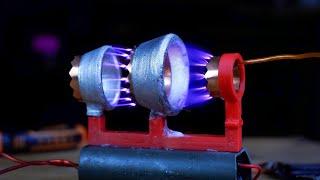
In this video: instead of using wires to transfer electricity
 NovaLingoNovaLingo
Watch the clip, read a subtitle excerpt, and preview vocabulary taken from this specific video.
From this video
A short excerpt from the English heard in this lesson.
0:00
Imagine
0:03
instead of using wires to transfer electricity
0:10
wirelessly on one side I give a 5 volts to a coil creating a field around it and the second
0:18
coil picks up that field and turns it back to into power. You can see this exact system in
These definitions and examples come from the language used in this specific lesson.
noun · Intermediate
Energy that powers lights, machines, and many devices.
Example
The storm cut electricity to the whole village.
In this video: instead of using wires to transfer electricity
adverb · Intermediate
In a way that sends signals or connects devices without wires.
Example
The speaker connects wirelessly to my phone in seconds.
In this video: wirelessly on one side I give a 5 volts to a coil creating a field around it and the second
instead
In place of someone or something else.
using
The present participle of use: doing something with a tool, method, or resource.
wire
A thin piece of metal used to carry electricity, make fences, or hold things.
transfer
To move someone or something from one place, person, job, or system to another.
side
One of the flat or outer parts of something.
give
To hand something to someone, or provide something for someone.
volt
A unit used to measure electrical force or pressure in a circuit.
coil
A length of something wound into a round or spiral shape.
creating
The -ing form of create: making something new.
field
An open area of land, or a subject or area of work.
around
In a circle, nearby, or in different parts of a place.
second
Coming after the first one in order, time, or importance.
pick
To choose someone or something from a group.
turns
The third-person form of turn: changes direction, position, or condition.
back
Toward an earlier place, position, or state.
exact
Completely correct, accurate, or precise.
system
A group of connected parts or rules that work together.
wireless
A system of communication or internet access that works without wires.
phone
A device used for speaking to people at a distance or using mobile services.
charger
A device used to put power into a battery.
feed
To give food to a person or animal; to supply something into a system.
thousands
The plural form of thousand: very large numbers, often more than two thousand.
millions
The plural form of million: very large numbers or amounts.
calculator
A small device or program used for doing mathematical sums.
camera
Equipment for taking photographs (usually consisting of a lightproof box with a lens at one end and light-sensitive film at the other).
electronic
Using small electrical parts or digital technology.
device
A machine or piece of equipment made for a particular purpose.
know
To have information, understanding, or experience of something.
make
To create, build, prepare, or cause something to happen.
circuits
The plural form of circuit: complete paths for electricity, travel, or events.
much
A large amount of something, used with uncountable nouns.
voltage
The amount of electrical force that pushes current through a circuit.
fry
To cook food in hot oil or fat.
engineers
The plural form of engineer: a person who designs, builds, or repairs machines, systems, or structures.
call
A spoken request, phone conversation, or decision by an official.
electromagnetic
Connected with electricity and magnetism.
pulse
The regular beat felt in the body as the heart pushes blood around.
video
A recording of moving pictures, often with sound.
go
To move or travel from one place to another; to leave or continue.
build
To make something by putting parts together.
needs
The plural form of need: things that people require because they are necessary or important.
really
Used to say something is true, strong, or more than expected.
high
Far above the ground, or greater than the usual amount, level, or degree.
generator
A machine that produces electricity or another useful output.
decide
To choose after thinking about different possibilities.
custom
A traditional habit or usual way of doing something.
transformer
A device that changes the voltage of an electric current.
found
To start or create an organization, city, or institution.
core
The central or most important part of something.
took
The past form of take: moved, carried, accepted, or needed something.
measurements
The plural form of measurement: sizes, amounts, or levels found by measuring.
layered
Made or arranged in several layers.
cylinder
A solid or container with two round ends and straight sides.
To produce words, pictures, or designs on paper or another surface.
printer
A machine that produces words or pictures from a computer onto paper.
clear
Easy to see, hear, understand, or free from unwanted things.
resin
A sticky substance from plants or a similar material used in plastics, glue, or coatings.
finally
After a long time, or as the last point in a series.
got
The past form of get: received, became, reached, or understood something.
secondary
Less important than something else, or coming after the first stage.
use
To do something with an object, tool, method, or ability.
mm
A written abbreviation for millimeter, a very small unit of length.
keep
To have something and not lose it, or to continue doing something.
track
A path, course, or set of marks left by a person, animal, or vehicle.
physical
Relating to the body, real objects, or things that can be touched.
button
A small object pushed to operate a machine, or fasten clothing.
switch
A small control that turns something on or off; a change from one thing to another.
place
A particular area, position, or building.
just
Only or simply, with nothing more.
spin
To turn around and around quickly.
magnet
An object that pulls iron or steel toward it.
section
One part of something larger, such as a document, place, or group.
careful
Giving attention to avoid mistakes, damage, or danger.
won
The past form of win: succeeded in a game, competition, prize, or struggle.
because
For the reason that something is true or happened.
breaks
The plural form of break: short rests, pauses, or damaged places.
start
To begin doing something or to make something begin.
again
One more time, or as before.
finish
To complete something or bring it to an end.
move
To change position or place, or to cause something to change position.
next
Coming immediately after the present one or after another thing in order.
another
One more, or a different person or thing.
anyway
Used to continue, change, or finish what you are saying.
lot
A large amount or number; also an area of land used for a purpose.
neck
The part of the body between the head and shoulders, or a narrow part of an object.
pain
An unpleasant feeling in the body, or strong emotional suffering.
eat
To put food in your mouth, chew it, and swallow it.
bunch
A group of things or people close together.
candy
A sweet food made mainly from sugar.
repeat
To say, do, or happen again.
process
A series of actions or changes that produce a result.
times
Plural periods, occasions, or moments when something happens.
totally
Completely or in every way.
insulate
To cover or protect something so heat, sound, electricity, or influence cannot pass easily.
yet
Up to now, usually in negative sentences or questions.
epoxy
A strong glue or plastic made from two mixed chemicals.
usual
Happening, done, or used in the normal or common way.
ratio
A relationship between two amounts that shows how much there is of each.
actually
Used to show what is true, real, or different from what was expected.
less
A smaller amount of something.
hardener
A substance added to another material to make it become firm or solid.
takes
The present form of take: gets, carries, needs, or accepts something.
longer
The comparative form of long: greater in length, distance, or time.
cure
To make an illness or problem go away.
way
A method, direction, route, or manner of doing something.
completely
In every way or as much as possible.
coats
The verb form of coat: covers something with a thin layer.
put
To place something somewhere; also to express something in words.
vacuum
A machine that cleans floors by sucking up dust and dirt.
chamber
A room or enclosed space, often used for official or special purposes.
air
The mixture of gases around Earth that people and animals breathe.
bubbles
The plural form of bubble: small balls of air or gas in liquid or air.
want
To wish for something, or need something.
nine
The number 9.
thick
Having a large distance between opposite sides, or made of many close parts.
whatever
Used before a noun to mean any thing or amount of that kind.
get
To receive, obtain, become, understand, or arrive at something, depending on context.
output
Information, work, or goods produced by a person, machine, or system.
circuit
A complete path for electricity, travel, or repeated events.
setup
The way equipment, people, or plans are arranged for use.
module
One separate part of a course, program, or machine that has a particular job.
measure
An action taken to achieve something, or a unit used to find size or amount.
generates
Produces or creates something, such as energy, income, or ideas.
signal
A sound, light, movement, or message that gives information or tells someone to do something.
frequency
How often something happens, or the number of waves passing a point each second.
set
To put something in a position, choose a value, or make something ready.
sends
The present form of send: makes something go to someone or somewhere.
gate
A door or barrier in a fence, wall, or entrance.
power
The ability to control, influence, or do something; also energy such as electricity.
supply
An amount of something available for use.
tuned
The past form of tune: adjusted an instrument, radio, or machine.
duty
A task or responsibility that someone is expected to do.
cycle
A set of events or actions that happens again in the same order.
find
To discover something by looking, learning, or experiencing it.
numbers
Plural form of number: symbols or amounts used for counting, measuring, or identifying.
error
A mistake in writing, speech, calculation, judgment, or computer use.
every
Used before a singular noun to mean all members of a group.
generally
In most cases, or when speaking about the usual situation.
sits
The present form of sit: rests on a seat or is in a place.
somewhere
In, at, or to a place that is not known or not stated.
electronics
Devices or systems that use small electrical parts.
yes
Used to give a positive answer or to show agreement.
basically
Used to say the main or simple truth about something.
married
Having a husband, wife, or spouse through marriage.
couple
Two people or things that are together or connected.
d
The fourth letter of the English alphabet.
case
A particular situation, example, or legal matter.
swap
To exchange one thing for another.
old
Having lived or existed for many years; not new.
heat
High temperature or warmth, or strong pressure in a difficult situation.
sink
A bowl fixed in a kitchen or bathroom for washing things.
bigger
Larger in size, amount, or importance.
added
The past form of add: put something more with another thing.
right
Something a person is morally or legally allowed to have, do, or receive.
source
The place, person, or thing that something comes from or starts with.
battery
A device that stores electricity for later use.
charging
The -ing form of charge: asking for money or filling with power.
port
A town or harbor where ships load and unload; also a sweet strong wine.
far
At, to, or by a great distance.
honestly
In a truthful way, or used to emphasize a sincere opinion.
enough
As much or as many as needed.
create
Make something new.
real
Existing in fact, not imagined, false, or artificial.
need
To require something because it is necessary or important.
energy
The strength or power needed to move, work, or stay active.
boom
A sudden loud deep sound, or a period of fast growth
release
The act of letting someone or something go free, or making something available to the public.
capacitor
An electronic part that stores a small amount of electrical energy.
exactly
In a completely correct or precise way.
big
Large in size, amount, age, or importance.
six
The number after five, or a group with that many members.
parallel
A similarity between two things that can be compared.
full
Containing as much as possible or having no empty space.
charge
An amount of money asked for a service, or an official accusation.
Download the app to explore every word from this video, hear pronunciation, save words, and review them later.


Keep exploring
 4 min 28 sec
 4 min 39 sec
 4 min 35 sec
Use NovaLingo to hear pronunciation, save every useful word, and review it later in context.